
A field of practice

Relational Center.

A Ship where we learn to sail the complexity of life true deep relating.

We see Mosaic not merely as a place, but as a living field of practice, a Relational Dojo. A place where we explore what becomes possible when people learn to relate differently to themselves, to one another, to land, to resources, to power, and to the future.

Each role below represents a different relationship with the ecosystem. Some people arrive to explore. Some to contribute. Some to build. Some to steward. Some to support from afar.

None is inherently better than another. Each represents a different expression of care and responsibility. People may move between roles as their capacity, availability, interests, and stage of life evolve.

Embodied inquiry, attention moving through the body.

Living inquiry

Questions that are alive in the field.

The questions we keep returning to—less to answer them than to let them shape how we live and relate.

01

How do we design a culture that helps people return to their center?

How can a culture continually invite us back into presence, discernment and inner alignment, so that our gifts, purpose and capacity to respond to reality can emerge from our deepest center rather than from fear, conditioning or reactivity?

02

How do we attract the people who deeply resonate with this work?

Rather than convincing or recruiting, how do we make our culture, practices and way of living so authentic and transparent that they naturally attract those who feel called to participate, while gently filtering out those who are not?

03

How do we cultivate individuality that strengthens relationship?

How can we help people become more fully themselves without becoming more separate? How do personal agency, unique expression and collective belonging become mutually reinforcing rather than competing values?

04

What rhythms of daily life best support human flourishing?

How do we balance stability with novelty, rest with contribution, structure with emergence, so that daily life continually supports growth instead of drifting into either chaos or comfortable stagnation?

05

How do we create an economy of participation?

How can contribution, care, responsibility and generosity be recognised in ways that go beyond purely transactional exchange, while remaining grounded, fair and materially sustainable? What kind of economic culture encourages stewardship instead of entitlement or sacrifice?

06

How do we build cultures that continuously learn and evolve?

How can governance, conflict, feedback, rituals and shared inquiry become mechanisms for collective learning? What allows a culture to remain coherent while continually adapting to new people, new challenges and new realities?

07

How do we become good ancestors?

How do we make decisions that increase the capacity of future generations to live with agency, wisdom and connection? What kinds of land, institutions, relationships and culture are worth leaving behind?

08

How do we cultivate a culture of intimacy?

How can we create the conditions for genuine intimacy to emerge, with ourselves, with one another, with the land, and with life itself? What practices help us move beyond performance, projection and isolation into relationships rooted in honesty, vulnerability, trust and deep presence? How can intimacy become a source of freedom and aliveness rather than dependency or fusion?

The seven archetypes

Explore our participatory framework.

Select an archetype to discover its relationship with the ecosystem.

At Mosaic, roles are not identities or positions to achieve. They are archetypes—different ways of participating in the life of the ecosystem. Rather than defining who you are, they help make visible how you are choosing to relate, contribute and take responsibility at a given moment.

We intentionally work with multiple roles because no human being is only one thing. Throughout a day, a season or a chapter of life, we naturally move between observing, learning, leading, supporting, caring and creating. By consciously stepping into different archetypes, we develop a broader range of capacities, gain empathy for the perspectives of others, and avoid becoming attached to a single identity or position. The aim is not to climb a hierarchy, but to cultivate the awareness and flexibility to embody the role that best serves the moment.

01, Curiosity

Explorer.

What is this place?

The Explorer enters the territory through experience.

This role is for those who wish to discover the land, meet the people, understand the culture, and sense whether the project resonates with them.

There is no expectation to lead, manage, or commit long-term. The invitation is simple: observe, listen, participate, learn.

Duration

A few days to 1 month

Time commitment

Flexible — based on free choice

Financial commitment

€300/month
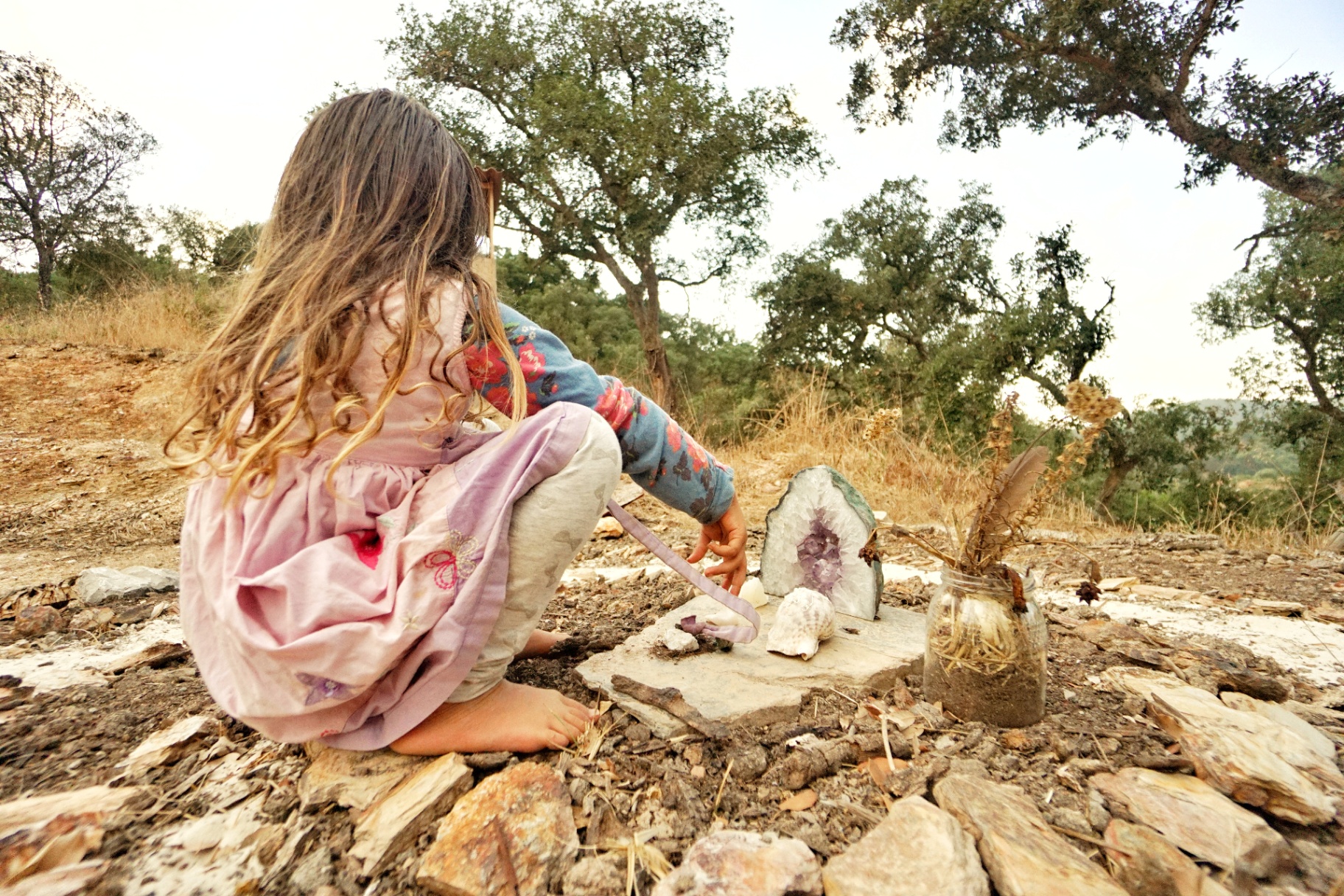
A child arranging stones and a geode on the land.

The next generation

Parenting.

How we welcome, raise and accompany the children among us is part of the relational practice. A framework that honours autonomy, presence, and the wisdom of the land.

The toolbox

Practices & Games.

A living archive of the practices, games and modalities we draw from in the field, each one a doorway into relational research.


Field impressions

Relating, in practice.

Moments from the research, between people, body, land, and material.

Guiding stars

The qualities of being we feel called to embody together. They describe who we are at our best, independent of situation. They are aspirational and must be recognizable in behavior.

Which relationship is yours, right now?

A short check-in is the honest way to sense which role meets you where you are.