The process
Finding the right size to live at
We do have an impact. Every one of us shapes the world around us, every day. The deeper problem is that we no longer feel it. We have lost the sense that what we do matters, because most of our lives are lived outside the human scale.
Either the systems we belong to are too small: a family, a household, carrying everything on their own: or they are too big: nations, global markets, institutions so vast that a single voice disappears in them. In one we are overloaded, in the other we are invisible. In neither do we find a healthy relationship between our power, our influence and the quality of our lives.
To find that balance again, we have to find the right size. We believe that for human beings, that size is the village.
Not a village of people buying houses. A village of people shaping the village. Its structure, its economy, its governance, its architecture, and the ecology that sustains it. And a village standing on shared ground: land that belongs to the whole community, not divided into private plots.
That is why Mosaic is not sold finished. It is built as a process, in stages, by the people who will live it. Below is where that process has been, where it is now, and where it is going, and how you can take part in each step.
01 · Past
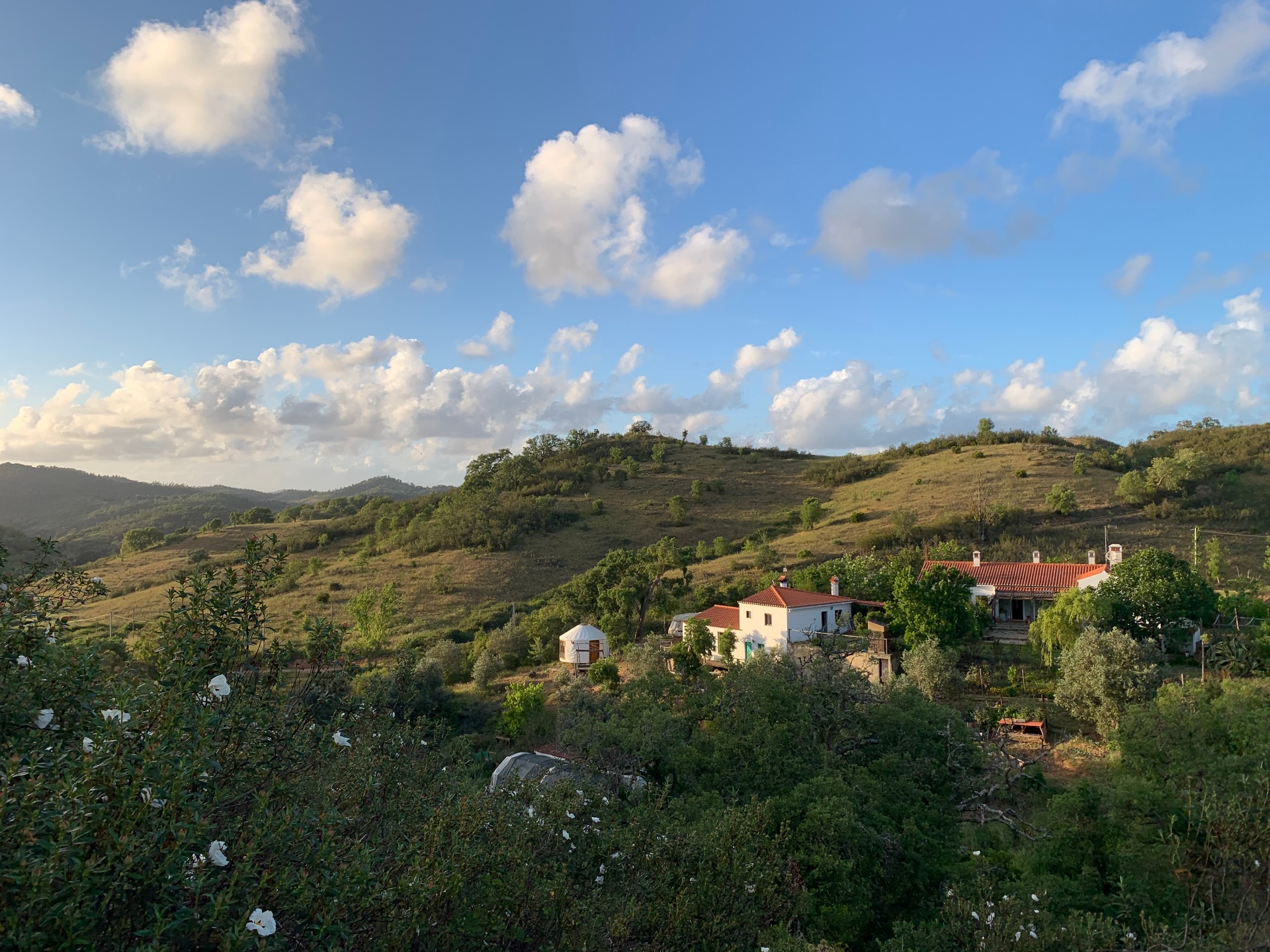
A piece of land, and a question
It began in 2014 with a question: what would it take to live well together? Years of gatherings, seasons of co-living and first buildings followed. This is what they taught us, including what we got wrong.
Read the essay →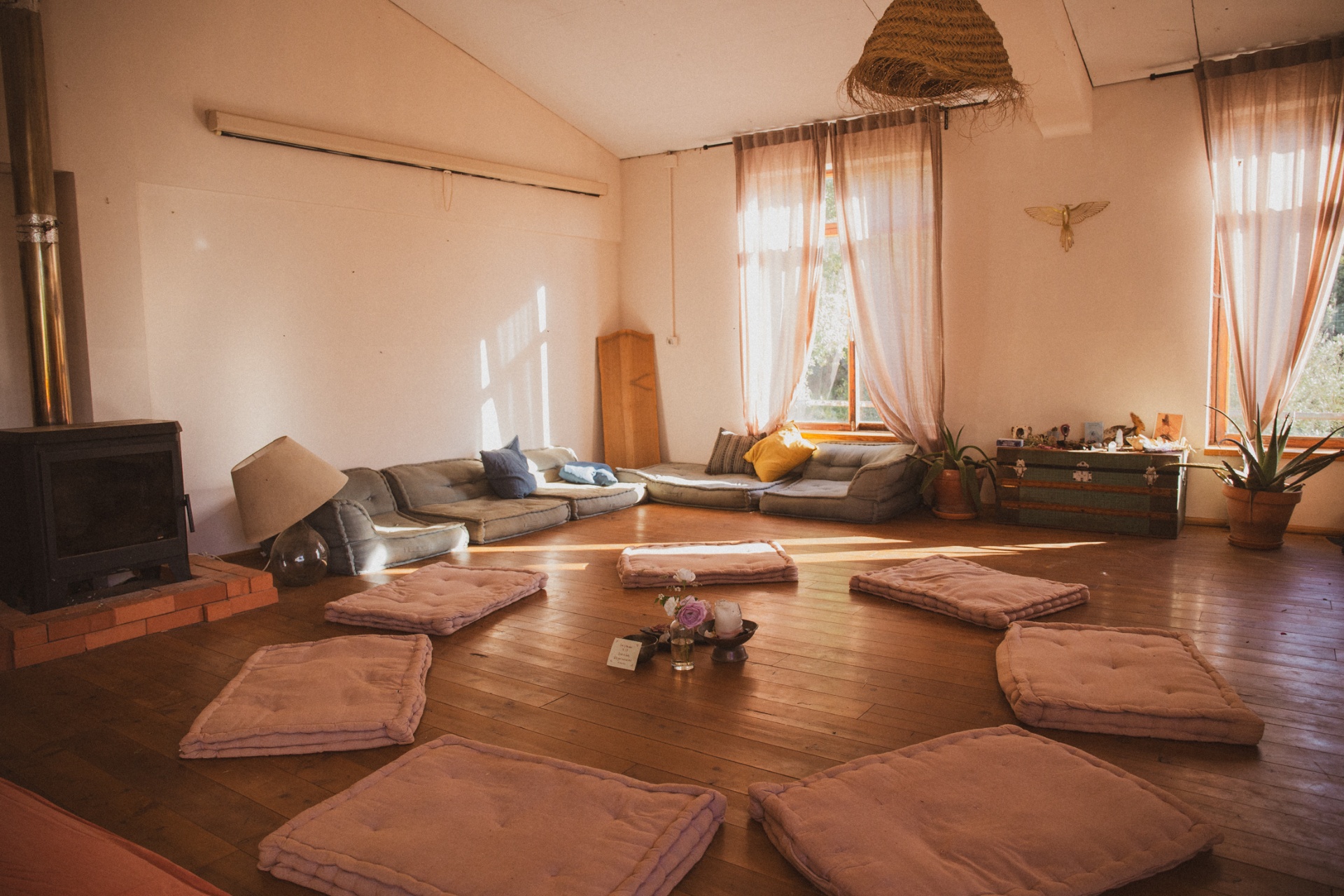
02 · Present
Building the container before the houses
The work right now is quiet and essential: giving the village a legal and relational body, and learning how individual purpose and collective life can hold each other.
Read the essay →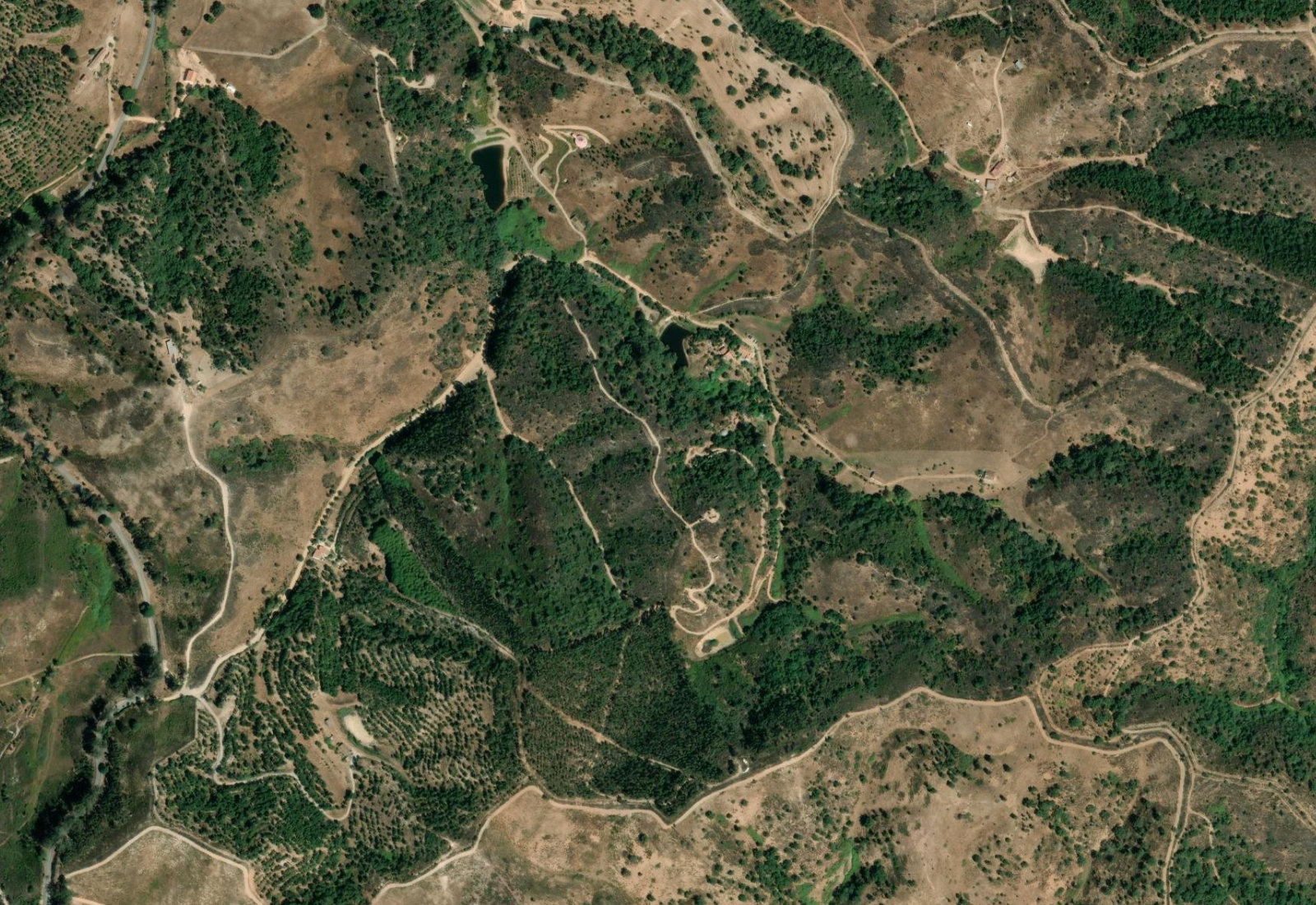
03 · Future
People, land, plan, then stones
The people first, then the land, then the plan, and only then the first stones. Why we build in this order, and why slowness is part of the design.
Read the essay →Where we are
NowGiving the village a body: forming the cooperative
Before there are houses, there have to be agreements. We are writing the statutes of the cooperative that will hold the village: how we decide, how someone becomes a member, how we move through conflict, and how value flows between each of us and the whole. The result is a legal and relational home the village can grow into.
Ways to participate
Skills
- Portuguese cooperative law
- Sociocracy and consent-based decision-making
- Conflict transformation
I want to contribute →Budget required
To be defined
- Oct – Nov 2026
A mastermind residency: purpose-driven work, woven into the village
A village that only sleeps together does not last; it also has to make a living together. For six weeks, founders live and work side by side on the land and ask how an individual calling can grow inside a shared ecosystem, feeding it and being fed by it. What comes out is the first sketch of the village economy, drawn by the people who will run it.
Ways to participate
Skills
- Mentoring founders
- Regenerative and cooperative business models
- Impact finance
I want to contribute →Budget required
To be defined
Where we are going
Date to be definedGathering the founding circle
Most communities that fail do not fail over money or land. They fail over people. So we take our time: seasons spent together, honest conversations, working days, and a clear path from first visit to full membership. At the end stands a circle of guardians who know they can decide, disagree and build together.
Ways to participate
Skills
- Facilitation
- Community onboarding design
- Coaching and mediation
I want to contribute →Budget required
To be defined
- Date to be defined
Getting to know the land before building on it
Before we change anything, we listen. We walk the hills in every season, sit by the lake at dawn, read the soil, the sun and the winds, and notice where the ground feels alive. From this comes a shared understanding of the land, written down as a site assessment and carried in the body of everyone who took part.
Ways to participate
Skills
- Deep-ecology and land-connection practice
- Soil and climate analysis
- Botany
I want to contribute →Budget required
To be defined
- Date to be defined
Mapping how animals and people move across the land
We follow wild boar tracks at first light, mark the paths our own feet choose, and notice where people naturally pause and meet. The village's paths and corridors will follow what already moves here instead of cutting across it. The outcome is a living map of movement that every later plan must respect.
Ways to participate
Skills
- Wildlife tracking
- Biodiversity surveys
- GIS and mapping
I want to contribute →Budget required
To be defined
- Starts early, never ends
Healing water and soil
In the Alentejo, water decides everything. We follow the winter rain down the slopes and learn to slow it, sink it and keep it: swales, ponds, cover crops, the first trees. This work begins long before the first house and never really ends, so that the land is more alive with every year we are on it.
Ways to participate
Skills
- Water retention and keyline design
- Soil regeneration
- Agroforestry
I want to contribute →Budget required
To be defined
- Date to be defined
Deciding what each place is for, before any building
Here we will gather. Here it will be quiet. Here children will play, here we will work, here we will celebrate. Walking the land together, we name what each place wants to be and how it should feel, long before anyone draws a wall. The result is a shared pattern language that the architects will translate.
Ways to participate
Skills
- Participatory design
- Pattern language
- Landscape design
I want to contribute →Budget required
To be defined
- Date to be defined
Shared ground: the land held in common
The land will not be cut into private plots. It will be held by the community as a whole, and protected from speculation for the generations after us. Together we define what that means in practice: how a household makes a home here, what it holds, and what it can never sell.
Ways to participate
Skills
- Community land trusts
- Commons and property law
- Legal structuring
I want to contribute →Budget required
To be defined
- Date to be defined
Designing the financing model
How does a village pay for itself without shutting anyone out? We design how homes, shared spaces and infrastructure are financed, blending member contributions, patient capital, grants and the village's own economy, so that belonging never depends only on what someone starts with. Design and finance are shaped side by side: every plan has to be one we can actually afford.
Ways to participate
Skills
- Financial modelling
- Community and cooperative finance
- Grant writing
I want to contribute →Budget required
To be defined
- Date to be defined
Architectural planning, in stages
Everything we have learned from the land, the people and the numbers becomes one plan. Architects and future residents draw it together, then divide it into three or four stages of development, each starting with the water, energy and access it needs. The village can grow at a human pace, and each stage learns from the one before, all the way to a licensed project.
Ways to participate
Skills
- Architecture and planning
- Bioclimatic and natural building
- Engineering
- Portuguese licensing
I want to contribute →Budget required
To be defined
- Date to be defined
Stage one: bringing the ruin back to life
The first stage starts with what is already here. The old ruin on the land becomes our prototype: stone by stone, with earth, lime and timber, in open building camps. It tests our techniques, our budget and our agreements at a real scale, and gives the village its first shared room before the next stages are built.
Ways to participate
Skills
- Stone masonry and restoration
- Earth and lime building
- Carpentry
- Leading building camps
I want to contribute →Budget required
To be defined
Step into the process
Walk a stretch of the way with us. Bring your skills, your hands or your resources to the step that calls you, and see it become part of the village.